
EOAT
End Of Arms Tooling
End-of-Arm Tooling (EOAT) refers to the specialized devices or assemblies mounted at the distal end of a robotic arm, serving as the primary interface between the robot and its work environment. Technically, EOAT encompasses grippers, suction cups, tooling fixtures, sensors, and actuators designed to execute precise manipulation tasks such as pick-and-place, assembly, welding, deburring, or inspection in automated manufacturing systems.
Core Functions
EOAT enables robots to grasp, hold, orient, and release workpieces with controlled force and repeatability, often integrating pneumatic, hydraulic, or electric actuation. Force/torque sensors within EOAT provide real-time feedback for adaptive control, preventing damage to delicate parts during high-speed operations.
Types and Configurations
Common EOAT types include parallel grippers for rigid objects, vacuum/suction systems for non-porous surfaces, magnetic or needle grippers for ferrous materials, and multi-tool changers for task versatility. Single-purpose EOAT suits dedicated processes like injection molding demolding, while modular quick-change systems minimize downtime by allowing rapid swaps.
Design Considerations
EOAT must balance payload capacity, cycle time, compliance (e.g., level compensators for misalignment), and integration with robot kinematics. Customization via CAD and FEA ensures minimal inertia and optimal center-of-gravity alignment, enhancing precision in six-axis manipulators.
Applications and Benefits
In industries like automotive, electronics, and packaging, EOAT boosts throughput by 20-50% while reducing labor costs and errors. Advanced variants incorporate vision systems and AI for dynamic adaptation, extending robot utility in flexible manufacturing cells.
More than 5200 sets at catalogue, help you navigate the right section
Our catalogue includes over 5,200 sets, organized to make navigation simple and efficient. Clear sections and logical grouping help you quickly find the products you need, whether for sourcing, comparison, or planning. This structure saves time, reduces confusion, and supports a smoother selection process for both new and experienced users.
SUCTION CUPS

SUCTION CUPS MODULES

NON STANDARD PARTS

SPRAY COATING

HUGGING PARTS

JOINT FINGERS PARTS

TRIMMING MODULES

VACUUM FITTINGS

GRABBER MODULES

PNEUMATIC CYLINDER
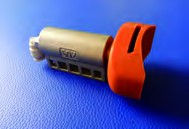
ELECTRO-MAGNETS

VACUUM SYSTEMS

PNEUMATIC CONNECTORS

CLAMPS

PROFILE CONNECTORS

CIRCULARE TUBE FRAME

TRIMMING JIGS

FLAT CLAMPING MODULES

JOINTS

QUICK-CHANGE JIGS

MOLD PROTECTION CURTAINS

ELECTRONIC PARTS

CYLINDER ACCESSORIES

FRAME MODULES

ROUND CONNECTORS

CUSTOM EAOT SOLUTIONS

PARTS AND CONNECTORS

JIGS AND PLATENS

HARDWARE

SCHOCK ABSORBENTS

TRIMMING TOOLS

CYLINDER MODULES

PARALLEL CLAMPS

PNEUMATIC HARDWARE

MECHANICAL MODULES
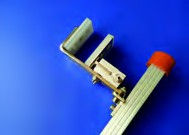
MULTI JOINTS FIXTURE
